Parmigiano Reggiano History
The History of Parmigiano Reggiano
The history of Parmigiano Reggiano® cheese, also known as Parmesan, goes back more than eight centuries. It is the story of how producers in a small zone in north-central Italy...Learn More…
There are many misconceptions about the word Parmesan, but there is no doubt whatsoever about Parmesan cheese’s origin! Parmesan refers to the famous cheese made in and around the Ital...
Learn More…
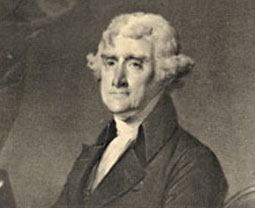
A case could be made that one of the American founding fathers, Thomas Jefferson, helped popularize Italy’s Parmesan cheese in America.
It seems likely that Thomas Jefferson, an educa...
Learn More…
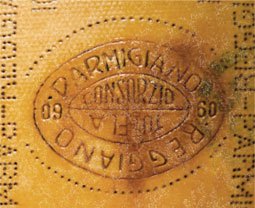
Since the ancient Romans, Italians have named their foods and wines for their places of origin. Parmigiano means simply “of or from Parma” and, likewise, Reggiano means “of...
Learn More…
The Truth
Behind Parmesan
The Game
Find the truth...
Play Now
Close
The History of Parmigiano Reggiano
The history of Parmigiano Reggiano® cheese, also known as Parmesan, goes back more than eight centuries. It is the story of how producers in a small zone in north-central Italy won recognition for the extraordinary quality of their carefully crafted cheese.
King of Cheeses
Amazingly, Parmigiano Reggiano cheese is made with just three ingredients: superb milk, sea salt and natural rennet. No additives or preservatives are used, ever, to make Parmigiano Reggiano, considered by many to be “the king of cheeses.”
Today we know it as Parmigiano Reggiano, but the French name Parmesan (Parmesano, in Italian) dates back even further—and the two are one and the same cheese! In Europe, by law, Parmesan can be used only to refer to Parmigiano Reggiano.
Making Parmigiano Reggiano
During the 13th century, Benedictine and Cistercian monks drained swampy land between the towns of Parma and Reggio and built irrigation systems to sustain lush pastures. These turned out to be ideal grazing pastures for dairy cows.
Before long, the cheese made by these farming monks from the rich milk--eventually known as Parmesan or Parmigiano Reggiano--was coveted by people in other parts of northern Italy, such as in the port city of Genoa. Because of its good taste and nutritional properties, this hard cheese became a staple on sea voyages.
Boccaccio, the great medieval writer, also celebrated the cheese destined to become Parmigiano Reggiano in his Decameron tales.
Parmigiano Reggiano is a hard grating cheese with a granular texture and appearance that results from the techniques used in its making as well as to long aging. Parmigiano Reggiano is not pressed like other hard grating cheeses. It is gently weighted, giving it the granular quality know as friability.
Aging contributes greatly to the flavor of Parmigiano Reggiano and, in the centuries before refrigeration, it also resulted in a cheese ideal for storage and for transporting over long distances. This cheese was welcomed as a nutrient-dense, highly portable food for sailors and traders, but it was also beloved by epicureans. By the 18th century, this cheese was on Thomas Jefferson’s table and the history of Parmigiano Reggiano in America was under way.
Parmigiano Reggiano Consortium Is Formed
Eventually, producers in the Parma-Reggio region and three other adjoining provinces joined forces to establish a controlled production zone and establish high standards for making the cheese that, in 1954, was officially named Parmigiano Reggiano.
Parmigiano Reggiano, a PDO Product
In 1996, Parmigiano Reggiano became the first Italian cheese to earn certification as a PDO (Protected Designation of Origin) product, an elite group of high-quality European foods made by traditional methods in strictly defined geographical areas.
Today, in keeping with the explosion of interest in authentic foods and regional Italian cooking, Parmigiano Reggiano cheese is imported into the U.S. and many other countries. In 1996, thanks to two Italian astronauts, Parmigiano Reggiano became the first all-natural raw milk cheese to be launched into outer space. Later Parmigiano Reggiano was adopted as an official space food, valued for the bone-strengthening calcium and other nutrients it contributes to astronauts’ diets.
Parmigiano Reggiano, Still Making History
Parmigiano Reggiano cheese continues to make history. It is exported around the globe, and yet every 80-pound wheel can be traced back to one place: the small and very special production zone for Parmigiano Reggiano in north-central Italy.